Written by: Katarina Đorđević
Sweden is one of the best countries in the world for people with disabilities to live in, primarily thanks to high standards of social security, good laws and numerous support services for people with disabilities. Thus, in the capital, Stockholm, there is also the institution of the Ombudsperson for people with disabilities.
Sweden has ratified the UN Convention on the Rights of Persons with Disabilities, which guarantees all citizens an equal right to participate, and support and services for persons with disabilities are regulated by several national laws, such as the Swedish Local Self-Government Act, the Social Services Act and the Support and Services Act for Persons with Certain Functional Impairments.
Work on equal opportunities begins in early childhood, and the National Agency for Education coordinates the Swedish government's support for the education of children with special needs. Given that the ability to travel smoothly is vital for people with disabilities, the Swedish government has instructed the country's municipalities to make facilities such as bus and tram stations as accessible as possible. People with permanent disabilities who have problems traveling or using public transport can receive a car allowance from the Swedish Social Insurance Agency, and this right can also be used by parents of children with functional disabilities.
The State Employment Service is tasked by the government with finding jobs for as many people with functional impairments as possible, and employers who employ people with limited working capacity are sometimes entitled to wage subsidies. Of the 10.23 million people living in Sweden, it is estimated that around a fifth have some form of disability, and the data shows that 346,000 people are employed, which means that every fifth person with a disability is working. However, there is no exact data on the number of people with disabilities, because during the population census, Swedish citizens are not asked if they have some kind of physical or mental handicap.
Although there is no single register of disabled people in Sweden, data from the National Fund for the Support of Disabled Students, which is located at Stockholm University, shows that out of 300,000 students in all of Sweden, more than 33,000 of them receive some kind of disability support. As Christine Loughren from the National Fund points out, the position of these academics is governed by the Anti-Discrimination Act, which states that disability is one of the seven areas of life and personal characteristics that must not be subject to discrimination, the Education Act, according to which all children and young people have the right to education, as well as the United Nations Convention on the Rights of Persons with Disabilities, which stipulates that signatory states are obliged to provide all citizens with a life without discrimination.
"According to the letter of the Discrimination Act, no person may be discriminated against on the basis of their disability and must have access to higher education, and all faculties in Sweden must provide the same conditions for studying to all academics. Students with disabilities do not have an advantage when enrolling at the faculty, so when applying they do not indicate whether they have a disability, and this is the main reason why we do not know how many academics with disabilities have an index of any of the 43 universities in Sweden, but we know that there are slightly more than 33,000 of them that requested aid on the basis of disability, which means that almost every tenth student in Sweden has some kind of handicap. These academics receive various types of individual assistance from higher education institutions, and each faculty decides how to help academics who have a problem with hearing, vision, or some kind of mental handicap. If they meet certain conditions, some academics also receive financial assistance from the National Fund for the Support of Students with Handicap.

The figures show that the number of students with index handicaps is increasing year by year - in 2011 there were around 7,000, three years later their number exceeded 10,000, in 2017 15,000 academics with handicaps were registered, only two years later that number "increased" to 20,000, and in the academic year 2023/2024 more were registered. of 33,000 students with disabilities in all of Sweden. Some of them achieve great academic results without any help, while others need assistance while studying. The university itself does not provide hearing aids or wheelchairs, but is required to build architectural ramps and cubicles that have equipment for students who are visually and hearing impaired.
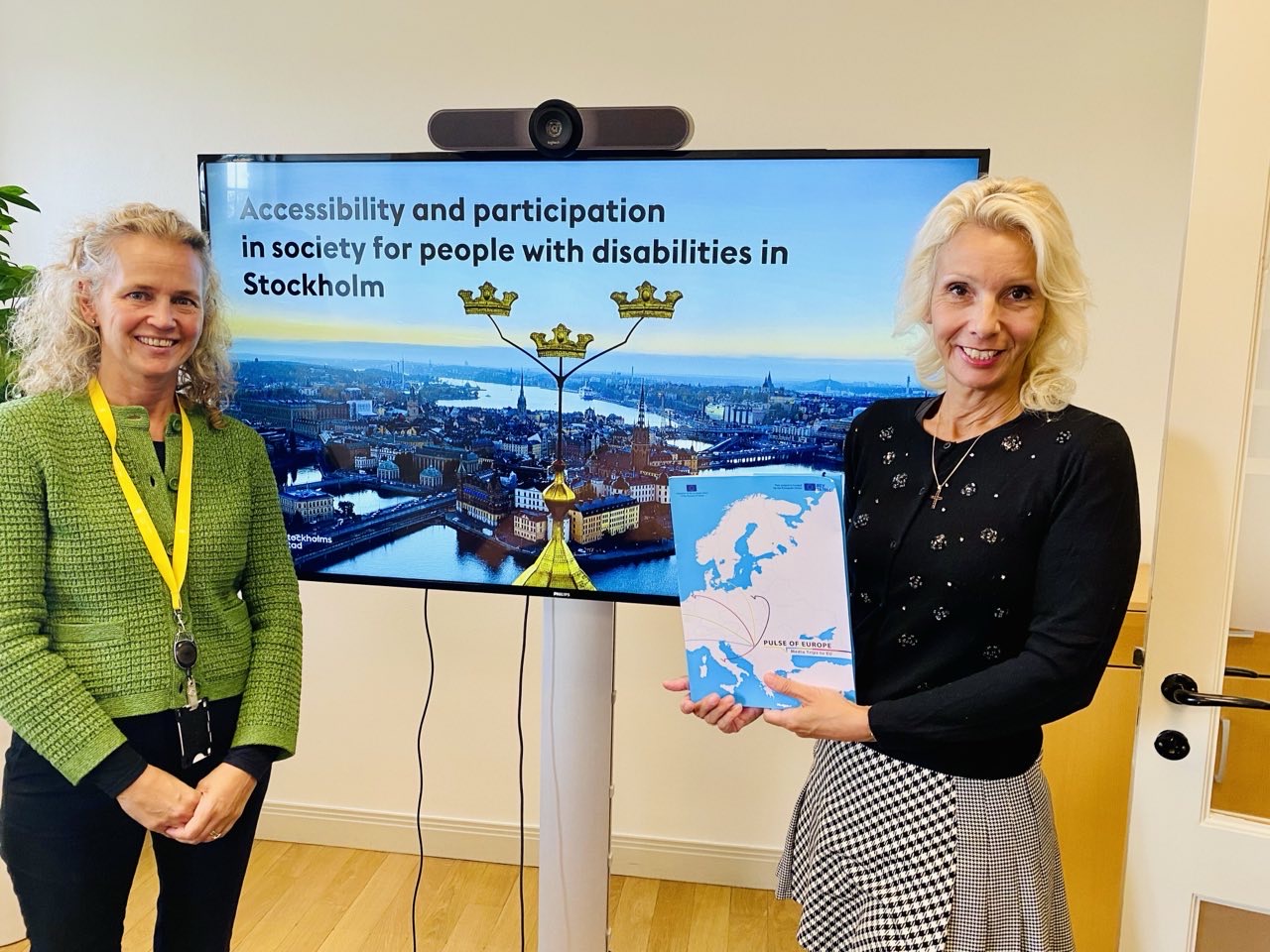
Astrid Toernerg, Stockholm's ombudsman for people with disabilities, says that in 2023, 8,132 people in the Swedish capital received some kind of help from the city budget due to disability, and that help was not of a financial nature. Statistics also show that during 2023, 3,144 users stayed in day care centers for people with disabilities, 704 people acquired the right to a personal companion, 258 people got a personal assistant to help them with their daily activities, and 487 families got a personal assistant for their child.
"Our policy is for every child with a disability to stay in the family as long as possible and for the state to help those parents, so only 78 children with disabilities in all of Stockholm do not live in a family. There are two regulations on the basis of which you can get help - the first is the law on social services, and the second is the law on help and support for a certain category of people with disabilities, and based on these two laws, 4,119 people in Stockholm last year received some kind of help in carrying out their daily activities. However, we know that there are many people who have a handicap is not an obstacle in carrying out daily activities, which do not apply for any kind of assistance from the city or the state. I have a friend with a disability who honestly says "I have a wheelchair, a job and my own car and I don't need help from the state" and he is not in any statistics or the register of disabled people,” says Astrid Toernerg.
"In Sweden, there are so-called special schools for children with disabilities, but a large number of these students attend regular schools, because our education is inclusive. We know that some children are diagnosed by a doctor before starting school or in early childhood, but sometimes this does not happen, so we do not know the exact number of students with disabilities in primary and secondary schools. However, education is the only "visa" for their better future, so we try to ensure that children with disabilities have the help of psychologists, speech therapists and special pedagogues, so that they can master school material more successfully. We are soon passing a new law whose goal is early detection and better prevention of people with disabilities, which will enable us to provide help to children with physical or mental handicaps as soon as possible", concludes our interlocutor, who reminds that on February 19, 2024, the Stockholm city government adopted a new program of accessibility and participation of people with disabilities for the period from 2024-2029.